



Bleak Faith Forsaken PS5
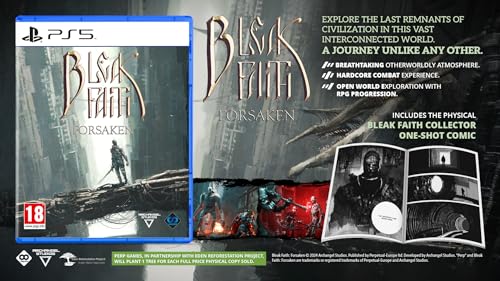
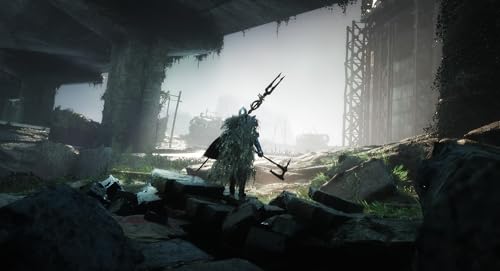
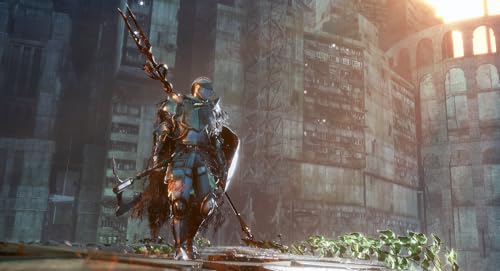
Explore the last vestiges of civilization in this vast, unforgiving, and interconnected world. Discover what remains of its history. Uncover pockets of civilization within the ever-expanding Omnistructure. Lose yourself in a journey unlike any other.
Release date: September 13, 2024
Original price was: 34,99 €.13,99 €Current price is: 13,99 €.
Best deal at:  PlayStation Store
Buy for best price
PlayStation Store
Set Lowest Price Alert
×
Notify me, when price drops
Set Alert for Product: Bleak Faith: Forsaken — PS5 - €13.99

 Cdiscount
 eBay
eBay
 Amazon
 Pixmania
Price history
×
| Price history for Bleak Faith: Forsaken — PS5 | |
|---|---|
|
Latest updates:
|
|

Bleak Faith Forsaken PS5
Original price was: 34,99 €.13,99 €Current price is: 13,99 €.
Description
Explore the last vestiges of civilization in this vast, unforgiving, and interconnected world. Discover what remains of its history. Uncover pockets of civilization within the ever-expanding Omnistructure. Lose yourself in a journey unlike any other.
- • Open world and exploration:
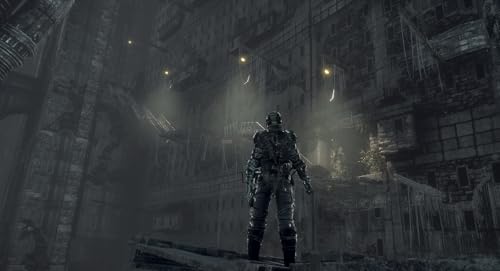
Explore the Omnistructure for the very first time. Rich in atmosphere and full of danger, prepare to be immersed in a new world unlike any you've ever known. Not all paths are accessible, so be ready to run, climb, jump, and ascend in Bleak Faith. - • Hardcore combat experience:
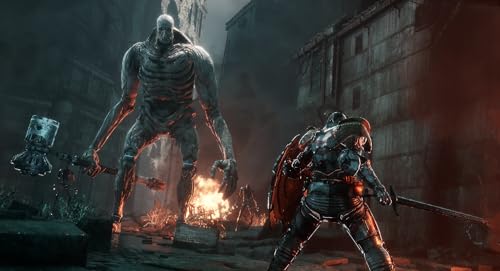
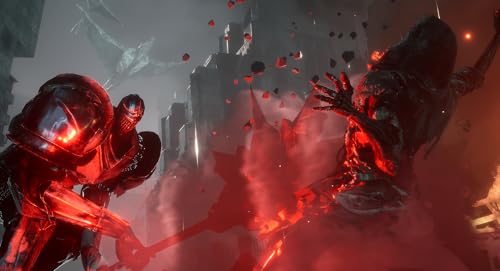
Combat is dangerous and will push you to your limits. Positioning, timing, and resource management are all things you must keep in mind at all times. Expect to be challenged. - • Epic boss battles:
Prepare for memorable boss battles with unique soundtracks. The bosses further increase the danger levels and ensure an exciting journey through the Omnistructure's multiple sectors. - • RPG progression and versatility of gameplay style:
Choose a class and progress towards your perfect playstyle. But remember that not all choices are reversible, so decide wisely which direction you take your character in.
Additional information
Specification: Bleak Faith Forsaken PS5
|
Bleak Faith Forsaken PS5 Videos
Price History
| Price history for Bleak Faith: Forsaken — PS5 | |
|---|---|
|
Latest updates:
|
|
Reviews (18)
18 reviews for Bleak Faith Forsaken PS5
Show all
Most Helpful
Highest Rating
Lowest Rating
Add a review
You must be logged in to post a review.


 French
  English
BEN –
Dark Souls-style level design. Excellent game with a few flaws. 👍👍👍
Serge G –
Crazy atmosphere. A truly insane atmosphere. The gameplay is both rigid and flexible; it's complex, but playable. The game is entirely in English, so it's very, very difficult to understand. But with the Yandex Translate app, the French translation is instantaneous on your TV screen, and nothing gets stuck. Thrilled to have this strange game.
Baki –
Not bad. A credible Soulslike that shines only because of its grandiose environments.
Adrien Wein –
An interesting Souls-like game set in an intriguing universe. This game managed to capture my attention despite its numerous flaws. The graphics are good without being extraordinary, but the atmosphere of the world makes it quite enjoyable. The difficulty is definitely there, and the game will sometimes challenge you with excessive difficulty and sometimes with clunky controls; its strongest point remains exploration. A game worth trying before buying, but if you're a Souls fan, you should have a good time.
belloc a. –
Incredible art direction. A game with incredible art direction. What a knockout! The sound design, the music. A game at the crossroads of worlds between Shadow of the Colossus, Blame, and the original Dark Souls. A few flaws, certainly, but they're nothing compared to the depth of this game.
Killerseven89 –
A wonderful and bewildering Souls-like game. It only took me half an hour to grasp the mechanics and appreciate the world of this gem; after that, the addiction intensified! Less budget than a Dark Souls or Elden Ring, but just as captivating... a revelation!
NickyLarson –
The atmosphere is insane, the game is truly fantastic. This little indie Soulslike is a real gem with an amazing atmosphere. It's absolutely wild and deserves to be known; it's a real treat. It's a shame it's only in English with no French subtitles, which will be a disadvantage since many people don't speak English well or at all. It's certainly possible to play without understanding the story, but most people won't want to try it then, even though it really deserves attention. For all its qualities, despite it being entirely in English, I'm giving it 5 stars.
Goze Laurent –
When Blame! meets Dark Souls and Shadow of the Colossus. Three names in the credits, plus a handful of voice actors: that's all it took to bring this chimera to life. But rather than hiding behind this small team and using it as an excuse to rush, simplify, or cut things out, these creators made no concessions to their initial ambition, and that's undoubtedly the most astonishing thing about it. They haven't sacrificed anything to their vision, which they've been constantly refining since the (chaotic) PC release of the game a year and a half ago. This is evidenced by the now-predominant shades of gray—earth, ash, muted, almost monochromatic—punctuated here and there by vibrant red, blue, or green, in a providential burst of contrast, a final touch of artificial life in this vast, open-air mechanical tomb, succeeding the more conventional color scheme of the original version (another stroke of genius, if ever there was one, but one somewhat diluted by the update). Because while the title had the difficult start one can imagine—too audacious for its own good, reportedly difficult to play, riddled with bugs and imperfections, even accused of theft for assets from From Software and Bandai Namco purchased in an unscrupulous development bundle—the Archangel studio has never ceased to strive for excellence. Righting the ship, correcting mistakes, patching, improving, adding: new areas, new enemies, until finally being able to release a console version without having to be ashamed. Except perhaps with pride. So, of course, it's an indie game. A low-budget game. A three-person project. Here and there, you'll encounter decorative textures, never very detailed – but this perfectly matches the Omnistructure's visual identity, which offers its share of breathtaking panoramas. The combat might lack a bit of punch, perhaps, even if it remains perfectly decent. If you have an exploratory spirit, you might find yourself wandering into a section of the game you weren't supposed to go to, or you might reach a surface too early that you were only meant to explore later. But in return, you'll have everything you'd expect from a game of this scale, and much more. Because this isn't just another Dark Souls clone. It comes with its own systems, its own mechanics, its own design logic. It puts action front and center, offering a combo and fatigue system that will remind veterans of Vagrant Story, with light weapons, heavy weapons, two-handed weapons, dual blades, ranged weapons, technomancy, crafting, leveling, secondary skills, unlockable perks, weapons and armor to upgrade like in Final Fantasy VII, a perfect parry system like in Lies of P, the ability to climb certain massive enemies like in Shadow of the Colossus, and much more! But it's exploration that truly shines, giving the character the ability to jump (even swim!), and exploiting this ability without excess or restraint, encouraging you to thoroughly explore every nook and cranny with the same pleasure as a new-generation Ys game. Besides the perfectly labyrinthine levels, which will sometimes require you to grab a pen and a corner of a tablecloth to draw your own maps, dungeon crawler style, or which will lead you astray for hours if you prefer to rely on instinct or the echo-sonar (which will show you access points to other areas, as well as some invisible collectibles), the journey will be full of hidden treasures and secret passages to discover: fragments of lore (a delight, given the literary writing – currently only available in English), graphic filters to vary the experience (cell-shading, pixelation, background obscuration, etc.), equipment, resources, you will never stop racking your brains to find out how to reach this or that part of the map, so that the twenty or so hours needed to complete the adventure (if you don't give in to the temptation of a new game + to platinum the beast) will pass like a hallucinatory dream. To put it simply: even the haptic feedback has been meticulously crafted, a real pleasure. Difficulty-wise, blood and sweat lovers will be disappointed: after the first area, which has a particularly steep learning curve (it takes some time to understand what you're doing and why, and to master the subtleties of the gameplay), you gain access to weapon upgrade menus, you start unlocking perks, and the game immediately becomes more accessible. This remains true until the end, with the exception of one or two final bosses (the penultimate one should elicit a few grimaces). In terms of challenge, it's closer to Steelrising than Shadow of the Erdtree: enemy patterns are exceptionally clear, making them easier to anticipate, and the gameplay (necessarily less precise than in a From Software game) renders massive enemies almost harmless (with a few formidable exceptions). Experience gained is not lost upon game over (instead, your progress will be capped at level 25 for your first playthrough), you'll have a portable save point that you can place wherever you like (provided there are no enemies nearby), defeated enemies generously drop healing potions galore, and if that's not enough, you can craft even more… With a little careful selection of upgrades based on your intended build, the four perks you'll have access to will transform you into a veritable war machine. The bosses themselves would be a mere formality, on the whole, if they didn't hit so hard and take such good damage, meaning that fights can last for more than ten minutes, with all the potential for mistakes and lapses in concentration that entails. All these reasons explain why the game leans more towards the demanding action genre than the pure Souls experience, though it still offers enough challenges to provoke just the right amount of frustration from time to time. This, against all expectations, perfectly reflects the spirit of this hybrid offering: violent yet contemplative, zen yet frenetic, intimate yet grandiose, enhanced by a masterfully cryptic storyline that borrows heavily from Blame! (bordering on fan-made territory, as certain dialogue snippets, environments, and NPCs seem straight out of Nihei's manga), but without being limited to it. It brings its own (fascinating) perspectives and its own (deliberate) frustrations towards the end, through what it doesn't explicitly state but strongly implies. It even indulges in some beautifully experimental cutscenes and a few additional nods to Evangelion. So much so that we can only yearn for a sequel, eternally dissatisfied as we are by nature. Thus, one could hardly have imagined a more beautiful filial tribute (claimed as such) than this monumental, colossal work, precariously balanced between wild ambitions and limited resources, accompanied in its physical version by a twenty-page comic whose content commands respect, once again. A copy of Nihei's work, certainly. But a near-perfect copy, so much so that one might think one is reading in this collage of concept art a forgotten chapter of the aforementioned manga. A feat that fans of the author will surely appreciate for its true worth. To top it all off, each physical copy of the game sold will result in the planting of a tree, to prevent our world from suffering the same fate as the game's. So, when it comes to the final verdict, there are three possible scenarios: - You only swear by mass-produced AAA games? You've never touched an indie game in your life? Move along. For you, at best, it'll be a 5 or a 6. - You like Souls-like games and have nothing against indie productions and low-budget games? For you, it'll be a 7 or an 8. - You like Blame!, Ueda's games, and Dark Souls? Congratulations. You have good taste. For you, it'll be a 9 or a 10. A word to the wise.
Killerseven89 –
A wonderful and bewildering Souls-like game. It only took me half an hour to grasp the mechanics and appreciate the world of this gem; after that, the addiction intensified! Less budget than a Dark Souls or Elden Ring, but just as captivating... a revelation!
NickyLarson –
The atmosphere is insane, the game is truly fantastic. This little indie Soulslike is a real gem with an amazing atmosphere. It's absolutely wild and deserves to be known; it's a real treat. It's a shame it's only in English with no French subtitles, which will be a disadvantage since many people don't speak English well or at all. It's certainly possible to play without understanding the story, but most people won't want to try it then, even though it really deserves attention. For all its qualities, despite it being entirely in English, I'm giving it 5 stars.
Goze Laurent –
When Blame! meets Dark Souls and Shadow of the Colossus. Three names in the credits, plus a handful of voice actors: that's all it took to bring this chimera to life. But rather than hiding behind this small team and using it as an excuse to rush, simplify, or cut things out, these creators made no concessions to their initial ambition, and that's undoubtedly the most astonishing thing about it. They haven't sacrificed anything to their vision, which they've been constantly refining since the (chaotic) PC release of the game a year and a half ago. This is evidenced by the now-predominant shades of gray—earth, ash, muted, almost monochromatic—punctuated here and there by vibrant red, blue, or green, in a providential burst of contrast, a final touch of artificial life in this vast, open-air mechanical tomb, succeeding the more conventional color scheme of the original version (another stroke of genius, if ever there was one, but one somewhat diluted by the update). Because while the title had the difficult start one can imagine—too audacious for its own good, reportedly difficult to play, riddled with bugs and imperfections, even accused of theft for assets from From Software and Bandai Namco purchased in an unscrupulous development bundle—the Archangel studio has never ceased to strive for excellence. Righting the ship, correcting mistakes, patching, improving, adding: new areas, new enemies, until finally being able to release a console version without having to be ashamed. Except perhaps with pride. So, of course, it's an indie game. A low-budget game. A three-person project. Here and there, you'll encounter decorative textures, never very detailed – but this perfectly matches the Omnistructure's visual identity, which offers its share of breathtaking panoramas. The combat might lack a bit of punch, perhaps, even if it remains perfectly decent. If you have an exploratory spirit, you might find yourself wandering into a section of the game you weren't supposed to go to, or you might reach a surface too early that you were only meant to explore later. But in return, you'll have everything you'd expect from a game of this scale, and much more. Because this isn't just another Dark Souls clone. It comes with its own systems, its own mechanics, its own design logic. It puts action front and center, offering a combo and fatigue system that will remind veterans of Vagrant Story, with light weapons, heavy weapons, two-handed weapons, dual blades, ranged weapons, technomancy, crafting, leveling, secondary skills, unlockable perks, weapons and armor to upgrade like in Final Fantasy VII, a perfect parry system like in Lies of P, the ability to climb certain massive enemies like in Shadow of the Colossus, and much more! But it's exploration that truly shines, giving the character the ability to jump (even swim!), and exploiting this ability without excess or restraint, encouraging you to thoroughly explore every nook and cranny with the same pleasure as a new-generation Ys game. Besides the perfectly labyrinthine levels, which will sometimes require you to grab a pen and a corner of a tablecloth to draw your own maps, dungeon crawler style, or which will lead you astray for hours if you prefer to rely on instinct or the echo-sonar (which will show you access points to other areas, as well as some invisible collectibles), the journey will be full of hidden treasures and secret passages to discover: fragments of lore (a delight, given the literary writing – currently only available in English), graphic filters to vary the experience (cell-shading, pixelation, background obscuration, etc.), equipment, resources, you will never stop racking your brains to find out how to reach this or that part of the map, so that the twenty or so hours needed to complete the adventure (if you don't give in to the temptation of a new game + to platinum the beast) will pass like a hallucinatory dream. To put it simply: even the haptic feedback has been meticulously crafted, a real pleasure. Difficulty-wise, blood and sweat lovers will be disappointed: after the first area, which has a particularly steep learning curve (it takes some time to understand what you're doing and why, and to master the subtleties of the gameplay), you gain access to weapon upgrade menus, you start unlocking perks, and the game immediately becomes more accessible. This remains true until the end, with the exception of one or two final bosses (the penultimate one should elicit a few grimaces). In terms of challenge, it's closer to Steelrising than Shadow of the Erdtree: enemy patterns are exceptionally clear, making them easier to anticipate, and the gameplay (necessarily less precise than in a From Software game) renders massive enemies almost harmless (with a few formidable exceptions). Experience gained is not lost upon game over (instead, your progress will be capped at level 25 for your first playthrough), you'll have a portable save point that you can place wherever you like (provided there are no enemies nearby), defeated enemies generously drop healing potions galore, and if that's not enough, you can craft even more… With a little careful selection of upgrades based on your intended build, the four perks you'll have access to will transform you into a veritable war machine. The bosses themselves would be a mere formality, on the whole, if they didn't hit so hard and take such good damage, meaning that fights can last for more than ten minutes, with all the potential for mistakes and lapses in concentration that entails. All these reasons explain why the game leans more towards the demanding action genre than the pure Souls experience, though it still offers enough challenges to provoke just the right amount of frustration from time to time. This, against all expectations, perfectly reflects the spirit of this hybrid offering: violent yet contemplative, zen yet frenetic, intimate yet grandiose, enhanced by a masterfully cryptic storyline that borrows heavily from Blame! (bordering on fan-made territory, as certain dialogue snippets, environments, and NPCs seem straight out of Nihei's manga), but without being limited to it. It brings its own (fascinating) perspectives and its own (deliberate) frustrations towards the end, through what it doesn't explicitly state but strongly implies. It even indulges in some beautifully experimental cutscenes and a few additional nods to Evangelion. So much so that we can only yearn for a sequel, eternally dissatisfied as we are by nature. Thus, one could hardly have imagined a more beautiful filial tribute (claimed as such) than this monumental, colossal work, precariously balanced between wild ambitions and limited resources, accompanied in its physical version by a twenty-page comic whose content commands respect, once again. A copy of Nihei's work, certainly. But a near-perfect copy, so much so that one might think one is reading in this collage of concept art a forgotten chapter of the aforementioned manga. A feat that fans of the author will surely appreciate for its true worth. To top it all off, each physical copy of the game sold will result in the planting of a tree, to prevent our world from suffering the same fate as the game's. So, when it comes to the final verdict, there are three possible scenarios: - You only swear by mass-produced AAA games? You've never touched an indie game in your life? Move along. For you, at best, it'll be a 5 or a 6. - You like Souls-like games and have nothing against indie productions and low-budget games? For you, it'll be a 7 or an 8. - You like Blame!, Ueda's games, and Dark Souls? Congratulations. You have good taste. For you, it'll be a 9 or a 10. A word to the wise.
Goze Laurent –
When Blame! meets Dark Souls and Shadow of the Colossus. Three names in the credits, plus a handful of voice actors: that's all it took to bring this chimera to life. But rather than hiding behind this small team and using it as an excuse to rush, simplify, or cut things out, these creators made no concessions to their initial ambition, and that's undoubtedly the most astonishing thing about it. They haven't sacrificed anything to their vision, which they've been constantly refining since the (chaotic) PC release of the game a year and a half ago. This is evidenced by the now-predominant shades of gray—earth, ash, muted, almost monochromatic—punctuated here and there by vibrant red, blue, or green, in a providential burst of contrast, a final touch of artificial life in this vast, open-air mechanical tomb, succeeding the more conventional color scheme of the original version (another stroke of genius, if ever there was one, but one somewhat diluted by the update). Because while the title had the difficult start one can imagine—too audacious for its own good, reportedly difficult to play, riddled with bugs and imperfections, even accused of theft for assets from From Software and Bandai Namco purchased in an unscrupulous development bundle—the Archangel studio has never ceased to strive for excellence. Righting the ship, correcting mistakes, patching, improving, adding: new areas, new enemies, until finally being able to release a console version without having to be ashamed. Except perhaps with pride. So, of course, it's an indie game. A low-budget game. A three-person project. Here and there, you'll encounter decorative textures, never very detailed – but this perfectly matches the Omnistructure's visual identity, which offers its share of breathtaking panoramas. The combat might lack a bit of punch, perhaps, even if it remains perfectly decent. If you have an exploratory spirit, you might find yourself wandering into a section of the game you weren't supposed to go to, or you might reach a surface too early that you were only meant to explore later. But in return, you'll have everything you'd expect from a game of this scale, and much more. Because this isn't just another Dark Souls clone. It comes with its own systems, its own mechanics, its own design logic. It puts action front and center, offering a combo and fatigue system that will remind veterans of Vagrant Story, with light weapons, heavy weapons, two-handed weapons, dual blades, ranged weapons, technomancy, crafting, leveling, secondary skills, unlockable perks, weapons and armor to upgrade like in Final Fantasy VII, a perfect parry system like in Lies of P, the ability to climb certain massive enemies like in Shadow of the Colossus, and much more! But it's exploration that truly shines, giving the character the ability to jump (even swim!), and exploiting this ability without excess or restraint, encouraging you to thoroughly explore every nook and cranny with the same pleasure as a new-generation Ys game. Besides the perfectly labyrinthine levels, which will sometimes require you to grab a pen and a corner of a tablecloth to draw your own maps, dungeon crawler style, or which will lead you astray for hours if you prefer to rely on instinct or the echo-sonar (which will show you access points to other areas, as well as some invisible collectibles), the journey will be full of hidden treasures and secret passages to discover: fragments of lore (a delight, given the literary writing – currently only available in English), graphic filters to vary the experience (cell-shading, pixelation, background obscuration, etc.), equipment, resources, you will never stop racking your brains to find out how to reach this or that part of the map, so that the twenty or so hours needed to complete the adventure (if you don't give in to the temptation of a new game + to platinum the beast) will pass like a hallucinatory dream. To put it simply: even the haptic feedback has been meticulously crafted, a real pleasure. Difficulty-wise, blood and sweat lovers will be disappointed: after the first area, which has a particularly steep learning curve (it takes some time to understand what you're doing and why, and to master the subtleties of the gameplay), you gain access to weapon upgrade menus, you start unlocking perks, and the game immediately becomes more accessible. This remains true until the end, with the exception of one or two final bosses (the penultimate one should elicit a few grimaces). In terms of challenge, it's closer to Steelrising than Shadow of the Erdtree: enemy patterns are exceptionally clear, making them easier to anticipate, and the gameplay (necessarily less precise than in a From Software game) renders massive enemies almost harmless (with a few formidable exceptions). Experience gained is not lost upon game over (instead, your progress will be capped at level 25 for your first playthrough), you'll have a portable save point that you can place wherever you like (provided there are no enemies nearby), defeated enemies generously drop healing potions galore, and if that's not enough, you can craft even more… With a little careful selection of upgrades based on your intended build, the four perks you'll have access to will transform you into a veritable war machine. The bosses themselves would be a mere formality, on the whole, if they didn't hit so hard and take such good damage, meaning that fights can last for more than ten minutes, with all the potential for mistakes and lapses in concentration that entails. All these reasons explain why the game leans more towards the demanding action genre than the pure Souls experience, though it still offers enough challenges to provoke just the right amount of frustration from time to time. This, against all expectations, perfectly reflects the spirit of this hybrid offering: violent yet contemplative, zen yet frenetic, intimate yet grandiose, enhanced by a masterfully cryptic storyline that borrows heavily from Blame! (bordering on fan-made territory, as certain dialogue snippets, environments, and NPCs seem straight out of Nihei's manga), but without being limited to it. It brings its own (fascinating) perspectives and its own (deliberate) frustrations towards the end, through what it doesn't explicitly state but strongly implies. It even indulges in some beautifully experimental cutscenes and a few additional nods to Evangelion. So much so that we can only yearn for a sequel, eternally dissatisfied as we are by nature. Thus, one could hardly have imagined a more beautiful filial tribute (claimed as such) than this monumental, colossal work, precariously balanced between wild ambitions and limited resources, accompanied in its physical version by a twenty-page comic whose content commands respect, once again. A copy of Nihei's work, certainly. But a near-perfect copy, so much so that one might think one is reading in this collage of concept art a forgotten chapter of the aforementioned manga. A feat that fans of the author will surely appreciate for its true worth. To top it all off, each physical copy of the game sold will result in the planting of a tree, to prevent our world from suffering the same fate as the game's. So, when it comes to the final verdict, there are three possible scenarios: - You only swear by mass-produced AAA games? You've never touched an indie game in your life? Move along. For you, at best, it'll be a 5 or a 6. - You like Souls-like games and have nothing against indie productions and low-budget games? For you, it'll be a 7 or an 8. - You like Blame!, Ueda's games, and Dark Souls? Congratulations. You have good taste. For you, it'll be a 9 or a 10. A word to the wise.
Juan Carlos Medina –
Incredible. Go for it without hesitation, it's truly better than AAA titles. Impossible to put down. The only thing is, it's in English and I don't understand a word, but I don't care. Very few games give me this feeling of not getting bored. Excellent replay value, plus it's a win-win.
BEN –
Dark Souls-style level design. Excellent game with a few flaws. 👍👍👍
belloc a. –
Incredible art direction. A game with incredible art direction. What a knockout! The sound design, the music. A game at the crossroads of worlds between Shadow of the Colossus, Blame, and the original Dark Souls. A few flaws, certainly, but they're nothing compared to the depth of this game.
Serge G –
Crazy atmosphere. A truly insane atmosphere. The gameplay is both rigid and flexible; it's complex, but playable. The game is entirely in English, so it's very, very difficult to understand. But with the Yandex Translate app, the French translation is instantaneous on your TV screen, and nothing gets stuck. Thrilled to have this strange game.
NickyLarson –
The atmosphere is insane, the game is truly fantastic. This little indie Soulslike is a real gem with an amazing atmosphere. It's absolutely wild and deserves to be known; it's a real treat. It's a shame it's only in English with no French subtitles, which will be a disadvantage since many people don't speak English well or at all. It's certainly possible to play without understanding the story, but most people won't want to try it then, even though it really deserves attention. For all its qualities, despite it being entirely in English, I'm giving it 5 stars.
Serge G –
Crazy atmosphere. A truly insane atmosphere. The gameplay is both rigid and flexible; it's complex, but playable. The game is entirely in English, so it's very, very difficult to understand. But with the Yandex Translate app, the French translation is instantaneous on your TV screen, and nothing gets stuck. Thrilled to have this strange game.